Call Now:
Consultants
Le secteur de l'iGaming s'enrichit constamment de nouvelles offres, mais il est rare de tomber sur un établissement qui combine avec autant de brio l'élégance visuelle et la richesse du contenu. Dès les premières minutes de navigation, l'esthétique soignée de la plateforme transporte le visiteur dans un monde de luxe, où l'or prédomine et où chaque détail de l'interface est pensé pour le confort visuel. Opérant sous la juridiction stricte de Curaçao, ce site assure une transparence et une sécurité infaillibles, éléments cruciaux pour rassurer les joueurs. Il n'est pas surprenant que ce kinbet casino france suscite un tel engouement parmi la communauté francophone et internationale.
L'un des aspects les plus séduisants reste sans conteste son offre d'accueil. Les amateurs de sensations fortes peuvent démarrer leur aventure avec une correspondance de 250 % jusqu'à 3000 euros, accompagnée de 350 lancers gratuits et d'un crabe bonus. Les passionnés de sport ne sont pas ignorés, avec un doublement de leur premier dépôt jusqu'à 100 euros, bien que cette partie puisse encore être optimisée face à la concurrence. La véritable force de la plateforme réside dans sa capacité à récompenser la fidélité. Le programme VIP, structuré en cinq échelons, offre des avantages croissants : gestionnaire de compte personnel, limites de retrait repoussées, et offres sur mesure comme le cashback de 15 %.
Pour ceux qui souhaitent rejoindre l'aventure, le processus d'inscription est d'une simplicité enfantine. Voici les étapes à suivre :
- Cliquez sur le bouton d'inscription situé bien en évidence sur la page d'accueil.
- Remplissez le formulaire avec votre adresse électronique et un mot de passe sécurisé.
- Fournissez vos informations personnelles exactes (nom, adresse, date de naissance).
- Validez la création du compte via le lien de confirmation reçu par courriel.
- Effectuez votre premier dépôt pour activer votre offre de bienvenue et commencer à miser.
Une fois inscrit, un catalogue ahurissant de plus de 7000 titres s'offre à vous. Grâce à des partenariats avec plus de 115 éditeurs majeurs comme QuickSpin, Playtech et Pragmatic, la diversité est au rendez-vous. Des machines à sous traditionnelles aux jackpots progressifs palpitants, en passant par les tables de jeux en direct animées par de vrais professionnels, l'ennui est impossible. De plus, la plateforme organise régulièrement des tournois massifs comme le "Spin Saga" doté de 10 000 €, ajoutant un esprit de compétition palpitant à chaque session.
Du côté des finances, la flexibilité est le maître-mot. Les dépôts commencent à partir de 10 euros seulement, facilitant l'accès à tous les budgets. Une panoplie d'options bancaires est disponible, incluant les cartes bancaires traditionnelles, les solutions de paiement modernes comme Mifinity, et une intégration poussée des cryptomonnaies majeures (Bitcoin, Ethereum, Ripple). Les délais de traitement des retraits sont raisonnables, bien que le processus de vérification d'identité (KYC) puisse parfois allonger l'attente pour les montants importants.
En somme, c'est un environnement de pari numérique de premier plan. Il parvient à équilibrer une ludothèque gigantesque avec des promotions régulières et un cadre sécurisé, s'imposant comme une référence solide pour tous les passionnés de divertissement en ligne.
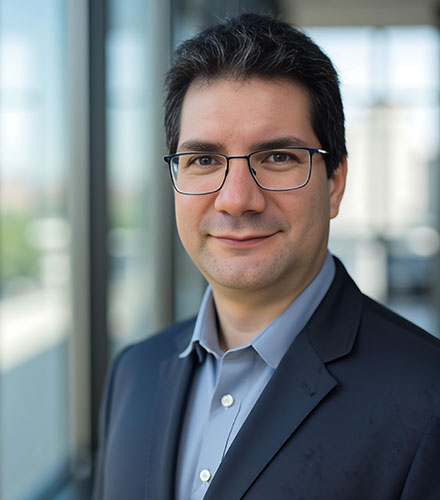
Antonio L. Piña
P.E.
Consulting Engineer/Civil & Structural
 832-431-0163
This email address is being protected from spambots. You need JavaScript enabled to view it.  740 East 13th Street
Houston, Texas 77008
740 East 13th Street
Houston, Texas 77008

Residential, Commercial, and Industrial Structures, Foundation Inspections and Analysis, Roadway/Bridge Structural Design and Analysis
- Bachelor of Science in Architectural Engineering at Drexel University, 2004.
- Primary areas of consultation: Structural - Foundation & superstructures of steel, timber, and reinforced concrete structures (residential and commercial). Design and construction of residential and commercial structures, lifting devices, and rigging for single-point lifts of structures and equipment (up to 600 tons). Civil - Roads and bridges, earth retaining structures, storm drainage collection and drainage systems, sanitary drainage collection and treatment plants, water supply distribution and irrigation systems, and site work design including compliance for handicap access.
- Extensive experience since 2006 in residential construction, home inspections, loss investigation and documentation. Also, consulted on indoor Air Quality, and Environment, Health, and Safety (EHS) consultation services to legal, insurance, commercial, and private clients. Investigated, sampled, evaluated, and reported on indoor air quality cases involving contamination by molds or other contaminants, in commercial buildings, schools, multi-family dwellings, and private residences. Additional experience in management and manipulation of various computer-based applications in finite element analysis, structural design, O&G Pipeline, hydrology, and AutoCAD design in various facets.
- Over 18 years of structural analysis and design.
- 2024-Present
McDOWELL OWENS ENGINEERING, INC
Houston, Texas
Consulting Engineer. Performed investigations and analyses of structural failures. Conducted structural investigations for damage due to hurricanes, fire loss, tree impacts, tornadoes, earthquakes, and floods. Projects include foundations and structures of residential, commercial, and industrial buildings, roof structures, earth retaining structures, and construction shoring.
- 2015 –2024
RIMKUS
Remote
Responsible for analysis of issues regarding civil/structural engineering disciplines related to property and product liability losses. Emphasis is on the design, construction, and performance of industrial, commercial, institutional, and residential buildings, with representative topics being architectural and structural issues, code and accessibility compliance, contractual disputes, and construction delays. Related responsibilities include advising municipal officials, school administration officials, property owners, attorneys, and insurance claims representatives on a broad range of building-related issues.
Provide Indoor Air Quality, and Environment, Health, and Safety (EHS) consultation services to legal, insurance, commercial, and private clients. Investigated, sampled, evaluated, and reported on indoor air quality cases involving contamination by molds or other contaminants, in commercial buildings, schools, multi-family dwellings, and private residences.
- 2009 –2015
SEK ENGINEERING, CORP.
Houston, TX
Project Manger. Performed field inspections of ongoing projects and existing buildings for additions or renovations. Performed and assisted in inspecting stream crossings and grade separations for steel, concrete, and timber bridges throughout Texas. Reviewed and prepared folders, including typing inspection reports in PonTex and photographs. Reviewed and designed foundations and tilt-wall buildings. Trained personnel in assisting with office duties and field inspections. Performed inspections of existing roadway conditions and determined areas to be replaced. Assisted in preparing plan and profile sheets, traffic control sheets in CAD, and calculated construction estimates. Provided cost-effective plans within schedule.
- 2006 –2009
DPIS ENGINEERING, LLC
Houston, TX
Frame Engineer. Designed roof, ceiling, and floor systems for residential production and custom builders. Explained application methods of the International Residential Code within the design to necessary parties. Provided low-cost solutions to framing issues arising in the field. Provided "lessons learned" exercises on prototypes to minimize construction issues in the field. Provided cost-effective plans within schedule.
- 2006
BRIGHTON HOMES
Houston, TX
Superintendent. Maintained schedule with various trades and vendors to complete residence within a given time frame. Discussed construction process with homeowners and maintained communication throughout construction. Inspected houses at various stages to ensure completion of work and enforce code regulations.
- 2004 –2006
GEO-TECHNOLOGY ASSOCIATE
Laurel, MD
Engineering Technician. Trained new technicians in the field and the office on the proper procedures. Analyzed and solved soil compaction issues at various construction sites. Tested soils to determine maximum dry density and optimum moisture at site and laboratory. Analyzed and evaluated construction drawings for subgrade preparation reports and ensured that built structures matched plans. Maintained detailed written logs, including test deviations and recommended course of action.
- Bachelor of Science in Architectural Engineering Drexel University, Philadelphia, PA, 2004
- Licensed Professional Engineer:
-
Alabama
No. 35860
-
Arkansas
No. 1701
-
Florida
No. 81008
-
Louisiana
No. 41122
-
Pennsylvania
No. PE085318
-
North Carolina
No. 44179
-
South Carolina
No. 33223
-
Texas
No. 119977
-
- American Society of Civil Engineers (ASCE)
- Architectural Engineering Institute (AEI)
- Texas Society of Professional Engineers (TSPE)
- National Society of Professional Engineers (NSPE)
- American Concrete Institute (ACI)
- Forensics Engineering Conference, UT at Austin, Eng. Executive Education, Feb. 8-9, 2024
- Forensics Engineering Conference, UT at Austin, Eng. Executive Education, Feb. 9-10, 2023
- 40-hour Mold Assessment Consultant Course

Glenn H. Gleason
Ph.D., P.E.
Consulting Engineer
- 832-831-2910
-
This email address is being protected from spambots. You need JavaScript enabled to view it. - 740 East 13th Street
Houston, Texas 77008
Mechanical System Analysis, Structural Analysis, Fuel Gas Systems, Workplace Accident & Safety Analysis, Failure Analysis
- Doctor of Philosophy in Mechanical Engineering, The University of Texas at Dallas, 2022 Dissertation: "Computational Analysis of Laser Impact Welding Processes Using Eulerian Formulation"
- Master of Science in Mechanical Engineering, The University of Texas at Dallas, 2019
- Bachelor of Science in Mechanical Engineering, The University of California at Berkeley, 2004
- Primary areas of consultation: mechanical systems and component failure analysis, water and waste water utility systems. Residential and commercial construction, HVAC and plumbing, roof inspections, water intrusion/damage, and foundation failure/deflection analysis. Construction Safety and OSHA compliance related to workplace safety and injury.
- Experience includes detailed on-site inspection, repair scope and specification development, and engineering report composition. Analyses are conducted according to current applicable standards.
- Apr. 2024 - Present
Houston, Texas
MCDOWELL OWENS ENGINEERING, INC
Consultant. Areas of primary interest include mechanical system and equipment failure analysis, commercial and residential construction, hazardous gas exposure, and mechanical, electrical, plumbing (MEP) related losses. Premises liability related to slip/trip and fall accidents.
- Oct. 2022 - Apr. 2024
Houston, Texas
EXPONENT, INC.
Senior Associate. Areas of primary interest includeautomotive, wind energy, oil and gas, rail, workplace/industrial safety, consumer technology development, power generation, and utilities.
- Jan. 2019 - Sep. 2022
Richardson, Texas
THE UNIVERSITY OF TEXAS AT DALLAS
Teaching Assistant/Research Contributor. Taught classes on Kinematics & Dynamics Laboratory, Mechanical Vibrations, Dynamics, and Statics.
- Jun. 2011 - Jan. 2019
Pleasanton, CA.
RATERLABS, INC.
Search Engine Evaluator. Worked with various major tech companies to develop machine learning algorithms for analysis of videos, images, and text content.
- Jan. 2005 - Jun. 2011
Dallas, Texas
BUCHER, WILLIS, AND RATLIFF CROP.
Engineering Technician. Composed the Water and Wastewater Impact Fee Study used to manage $80M in planned infrastructure expenses for the city of Melissa, Texas. Conducted numerous site inspections for various city infrastructure projects, and performed water and wastewater system design & analysis.
- Bachelor of Science in Mechanical Engineering at The University of California at Berkeley, CA, 2004
- Master of Science in Mechanical Engineering at The University of Texas at Dallas, Richardson, TX, 2019
- Doctor of Philosophy in Mechanical Engineering at The University of Texas at Dallas, Richardson, TX, 2022
- Licensed Professional Engineer
-
Texas
No. 154535
-
Georgia
No. PE053211
-
Florida
No. 100441
-
Pennsylvania
No. PE096554
-
- API 579 / ASME FFS-1
- OSHA 30-Hour Outreach Training Program - General Industry
- USA DOT FAA - Remote Pilot License – DRONE – License No. 5049778
- The American Society of Mechanical Engineers (ASME) (Member 2018-Present)
- National Fire Protection Association (NFPA) (Company Affiliation)
- “Computational Analysis of Laser Impact Welding Processes."
Summer Undergraduate Research Seminar, The University of Texas at Dallas, Richardson, TX., 2022 -
“Predictive Modeling of Laser Shock Peening Induced Near-Surface Residual Stress in Alumina.”
49th SME North American Manufacturing Research Conference (Virtual Presenter) Cincinnati, OH, 2021
- Teaching Assistant / Research Contributor, The University of Texas at Dallas, Richardson, TX. 2019-2022
Classes Taught:- Kinematics & Dynamics Laboratory
- Mechanical Vibrations
- Dynamics
- Statics
- Failure Analysis
- Corrosion Investigation
- Laser Impact Welding
- Optical Profilometry
- Mechanical Testing
- Vibrations
- "Influence of surface roughness on transient phenomena occuring during laser impact welding." Gleason, Glenn, Karl Bailey, Sumair Sunny, Malik,Arif, and Rodrigo A Bernal. Journal of Manufacturing Processess 80 (2022): 480-490. https://doi.org/10.1016/j.jmapro.2022.06.022
- "Numerical investigation elucidating effects of microstructure on the transient thermomechanical phenomena during laser impact welding." Gleason, Glenn, Sunny, Sumair, Mathews, Ritin, and Malik, Arif. Journal of Manufacturing Processess 79 (2022) 115-125. http://doi.org/10.1016/j.jmapro.2022.04.031
- "Numerical investigation of transient interfacial material behavior during laser impact welding." Gleason, Glenn, Sunny, Sumair, Mathews, Ritin, and Malik, Arif. Scripta Materialia 208 (2022): 114325. https://doi.org/10.1016/j.scriptamat.2021.114325
- "Simulation of laser impact welding for dissimilar additively manufactured foils considering influence of inhomogenous microstructure." Gleason, Glenn, Sunny, Sumair, Mathews, Ritin, and Malik, Arif. Materials & Design 198 (2021) 109372. https://doi.org/10.1016/j.matdes.2020.109372
- "Effect of metal additive manufacturing residual stress on post-process machining-induced stress and distortion." Sunny, Sumair, Mathews, Ritin, Gleason, Glenn, Malik, Arif, and Halley, Jeremiah. International Journal of Mechanical Sciences 202 (2021) 106534. https://doi.org/10.1016/j.ijmecsci.2021.106534
- "Importance of microstructure modeling for additively manufactured metal post-process simulations." Sunny, Sumair, Gleason, Glenn, Bailey, Karl, Mathews, Ritin, Malik,Arif. International Journal of Engineering Science 166 (2021): http://doi.org/10.1016/j.jmapro.2022.06.022
- "Simulation and experimental comparison of laser impact welding with a plasma pressure model." Sadeh, Sepehr, Gleason, Glenn, Hatamleh, Mohammad, Sunny, Sumair, Yu, Haoliang, Malik, Arif, and Qian, Dong. Metals 9, no.11 (2019) 1196. https://doi.org/10.3390/met9111196
Use of Information
We are committed to protecting your privacy. We only use the information we collect about you to evaluate your potential claim, send you information about our services, and to keep you informed about events. If you provide us with your email and/or mailing address, you are giving us permission to send you information. We may send you information that we feel you may be interested in using the email address you provided. If you no longer wish to receive emails from us, please follow the Opt-Out instructions in each email. In addition, we reserve the right to disclose any information collected from you to appropriate governmental or regulatory authorities if required by law.
Protection of Information
All of the customer data we collect is protected against unauthorized access. We do not automatically gather your personal information. Instead, this information is only obtained if you voluntarily provide it to us by contacting us in person, via email, telephone, or by submitting a form on our website. Please note that any information you send us through the Internet is not secure and is done entirely at your own risk. We do not use cookies to collect or store any information about visitors to our website.
Disclosure of Information
We do not sell, trade, or rent your personal information to others. We may release your information when we believe, in good faith, that such release is reasonably necessary to (i) comply with law, (ii) enforce or apply the terms of any of our user agreements or (iii) protect the rights, property or safety of us, our users, or others.
Your Consent
By using our website, you consent to the collection and use of this information by McDowell Owens. If we decide to change our privacy policy, we will post those changes on this page so that you are always aware of what information we collect, how we use it, and under what circumstances we disclose it. McDowell Owens reserves the right to revise this policy at any time. Please check this page for changes. Your use of this website demonstrates your consent to this Privacy Policy.
This website also provides links to other sites. The privacy policies of these sites are the responsibility of the linked site, and we have no control or influence over their policies. Please check the policies of each site you visit for specific information. McDowell Owens cannot be held liable for damage or misdoings of other sites linked or otherwise.
Questions and Feedback
If you have any questions or feedback related to our Privacy Policy, please contact us:
McDowell Owens
740 East 13th Street Houston, Texas 77008
T: 832-219-7413
Email:
What a Forensic Engineer Does
We find answers. We solve puzzles. The forensic engineer’s mission is to investigate, solve, and explain the most challenging engineering & scientific problems.
To vastly simplify, forensic engineering is the application of engineering principles and science employed to investigate the failure of a machine, component, material, structure, system, and more.
It’s easy to think of it as a form of reverse engineering – using scientific methodology to uncover why something went wrong or stopped working. The same methodologies also allow forensic engineers to help clients take safety measures that will stop accidents and serious incidents from occurring in the first place.
The reports complied by forensic engineers are to establish the cause of incidents where injury or property damage have occurred - such as:
-
- Building Collapse
- Sprinkler Failure
-
- Machine Malfunction
- Fires And Explosion
-
- Construction Defects
- Electrical Failure
-
- Materials Failure
- Structural
-
- Product Defect
- Collisions And Crashes
- Marine Incidents
- Energy And Renewable System Failures
- Building Collapse
- Sprinkler Failure
- Machine Malfunction
Forensic engineers are called in to assess catastrophic damage following hurricanes, floods, earthquakes, wildfires, explosions, hailstorms, tornadoes, large fires – any unexpected event that can cause havoc on day-to-day business operations.
Forensic Engineering Fields
There are many types of forensic engineering experts, from biomechanical to metallurgy to geotechnical. Forensic engineers cover this wide range of areas, all of which involve the application of engineering principles to investigate and analyze failures, accidents, and other incidents. They work to determine the root causes and contribute to the resolution of legal and insurance-related matters. Forensic engineers and experts offer their expertise to clients from the private sector to the legal, oil and gas, insurance, electrical, and petrochemical industries in matters surrounding:
- Structural Engineering: Investigating building collapses, bridge failures, foundation issues, and structural integrity problems.
- Civil Engineering: Analyzing accidents related to roads, highways, transportation systems, and geotechnical failures.
- Industrial Accidents: Investigating accidents in manufacturing plants, factories, and other industrial settings to determine their causes and prevent future occurrences.
- Mechanical Engineering: Examining failures of machinery, equipment, and mechanical systems in industrial settings, automotive incidents, and product liability cases.
- Environmental Engineering: Addressing environmental incidents like pollution, hazardous material spills, and ecological damage.
- Electrical Engineering: Investigating electrical fires, power system failures, electrocutions, and electrical equipment malfunctions.
- Traffic Accident Reconstruction: Analyzing vehicle collisions to determine factors like speed, impact angles, and driver behavior.
- Materials Engineering: Analyzing material failures, such as metallurgical failures in industrial equipment or construction materials.
- Geotechnical Engineering: Evaluating soil and foundation failures, landslides, and geological hazards.
- Fire Investigation: Examining the cause and origin of fires, fire spread analysis, and evaluating fire protection systems.
- Forensic Biomechanics: Studying the mechanics of human movement and injuries to understand accident scenarios and impact effects.
- Product Failure Analysis: Investigating the failure of consumer products, appliances, and industrial equipment.
- Construction Defects: Examining construction-related issues like building code violations, poor workmanship, and design flaws.
- Marine Accidents: Investigating accidents related to ships, boats, and offshore structures.
- Aerospace Accidents: Analyzing failures and accidents involving aircraft and spacecraft.
- Cybersecurity Incidents: Examining cybersecurity breaches, data theft, and digital evidence analysis.
- Human Factors Engineering: Assessing the role of human error and human-machine interactions in accidents and incidents.
- Civil Engineering: Analyzing accidents related to roads, highways, transportation systems, and geotechnical failures.
- Industrial Accidents: Investigating accidents in manufacturing plants, factories, and other industrial settings to determine their causes and prevent future occurrences.
- Mechanical Engineering: Examining failures of machinery, equipment, and mechanical systems in industrial settings, automotive incidents, and product liability cases.
Finding the Solution
Forensic engineers conduct a variety of tests and analyses to investigate failures, accidents, and incidents. Specific tests depend on the nature of the case and the area of engineering concerned. Common types of tests are:
- Materials Analysis: Testing the composition and properties of materials, such as metals, plastics, concrete, and composites, to assess their suitability, quality, and potential weaknesses.
- Metallurgical Analysis: Examining the microstructure and properties of metals to identify defects, cracks, and failure mechanisms.
- Non-Destructive Testing (NDT): Utilizing techniques like ultrasonic testing, radiography, magnetic particle testing, and dye penetrant inspection to evaluate the integrity of materials and components without causing damage.
- Structural Load Testing: Applying controlled loads to structures to assess their load-carrying capacity and response.
- Finite Element Analysis (FEA): Using computational methods to simulate and analyze the behavior of structures and components under different conditions.
- Failure Analysis: Investigating the root cause of failures in materials, structures, or mechanical components to determine why they broke down or malfunctioned.
- Electrical Testing: Assessing the performance and safety of electrical systems, circuits, and equipment, including voltage, current, and resistance measurements.
- Fire Testing: Conducting controlled experiments to understand fire behavior, fire spread, and the effects of fire on materials and structures.
- Accident Reconstruction: Using physics and engineering principles to reconstruct the sequence of events leading to an accident, such as traffic collisions or industrial mishaps.
- Impact and Crash Testing: Simulating collisions and impacts to study how structures, vehicles, or products respond to forces.
- Geotechnical Testing: Analyzing soil and rock properties to assess their stability and bearing capacity for construction projects.
- Fluid Dynamics Analysis: Studying the behavior of fluids, such as air or water, to understand their impact on structures or accidents like water-related incidents.
- Computer Forensics: Extracting and analyzing digital data and electronic evidence from computers and digital devices.
- Product Testing: Evaluating consumer products, industrial equipment, and machinery to determine if they meet safety standards and specifications.
- Human Factors Testing: Conducting experiments and simulations to understand human behavior and performance in various scenarios, such as accidents or usability assessments.
- An immensely important skillset for any forensic engineer is the ability to not only be fluent in testing methods but to also have the meticulousness to perform them, then interpret the results to reach the correct conclusion.

- Materials Analysis: Testing the composition and properties of materials, such as metals, plastics, concrete, and composites, to assess their suitability, quality, and potential weaknesses.
- Metallurgical Analysis: Examining the microstructure and properties of metals to identify defects, cracks, and failure mechanisms.
- Non-Destructive Testing (NDT): Utilizing techniques like ultrasonic testing, radiography, magnetic particle testing, and dye penetrant inspection to evaluate the integrity of materials and components without causing damage.
An immensely important skillset for any forensic engineer is the ability to not only be fluent in testing methods but to also have the meticulousness to perform them, then interpret the results to reach the correct conclusion.
Forensic Engineer Duties, Responsibilities, and Basic Requirements
Perhaps the best way to show what a forensic engineer does is to look at what it takes to be a forensic engineer. Let’s start with some of the duties and responsibilities of a forensic engineer:
- Investigating accidents, failures, and other incidents to determine the root cause
- Examining and analyzing physical evidence, such as damaged structures or equipment, to understand how an incident occurred
- Interviewing witnesses and gathering relevant information about an incident
- Conducting experiments and simulations to verify the findings of an investigation
- Preparing reports and presentations outlining the findings of an investigation
- Providing expert testimony in legal proceedings related to an incident
- Staying up to date on the latest technologies, techniques, and regulations related to forensic engineering
- Investigating accidents, failures, and other incidents to determine the root cause.
- Examining and analyzing physical evidence, such as damaged structures or equipment, to understand how an incident occurred
- Interviewing witnesses and gathering relevant information about an incident
Followed by the general, minimal, job requirements:
- Bachelor’s degree in engineering or a related field
- Master’s degree or Ph.D. in engineering or a related field, depending on the employer
- Professional engineering license (PE)
- Strong analytical and problem-solving skills
- Ability to analyze and interpret complex technical data
- Excellent communication and presentation skills
- Attention to detail and accuracy
- Ability to work independently and as part of a team
- Flexibility to work on a variety of projects and adapt to changing priorities
- Bachelor’s degree in engineering or a related field
- Master’s degree or Ph.D. in engineering or a related field, depending on the employer
- Professional engineering license (PE)
And, lastly, the basic, required, skills that forensic engineering require:
- Strong analytical and problem-solving skills
- Attention to detail and accuracy
- Excellent communication and presentation skills
- Ability to work independently and as part of a team
- Flexibility and adaptability
- Knowledge of relevant regulations and standards
- Specialized industry knowledge
- Legal training or experience
- Strong analytical and problem-solving skills
- Attention to detail and accuracy
- Excellent communication and presentation skills
About McDowell Owens
McDowell Owens Engineering, Inc. is a multi-disciplinary, worldwide forensic engineering firm. Since 1986, we have provided comprehensive, unbiased forensic engineering and failure analysis services. Over the decades we have worked with clients from the private sector to the legal, oil and gas, insurance, electrical, and petrochemical industries, among others.
Established leaders in the field, McDowell Owens’ professional engineers, fire scientists, and consultants are experts in forensic failure analysis. Our clients rely on us to conduct exhaustive investigations to produce a multi-disciplinary analysis in the wake of any incident or disaster.