Call Now:

- Details
- Written by: Mcdowell Owens Integrated Forensic Engineering
- Category: Uncategorised
- Hits: 9293

Nestor J. Camara
B.SC., IAAI-CFI(V)®, NAFI-CVFI
Senior Fire Analyst / Mechanical Technician
 832-831-2910
This email address is being protected from spambots. You need JavaScript enabled to view it.  740 East 13th Street
Houston, Texas 77008
740 East 13th Street
Houston, Texas 77008

Fire Science, Fire, and Explosion Analysis, Residential Appliance Failure and Gas System Analysis and Testing
- Bachelor of Science (Fire Science). Extensive training and experience in fire and explosion analysis, origin and cause investigations, and documentation and preservation of evidence.
- Obtained Certified Fire Investigator (CFI) through Texas Commission on Fire Protection (1998).
- Primary areas of consultation: Forensic Fire Analysis, Vehicle Fire Analysis inclusive of Recreational, Personal, and Commercial Vehicles, Residential Appliance Failure Analysis, Natural Gas and LP Gas Piping Systems, Site Documentation and Computer-Aided Design, Evidence Documentation and Preservation.
- Extensive experience in gas system analysis and testing, explosion, fire origin and cause analysis including LPG and other flammable gas and liquid-related losses, and in the design and instrumentation of fire and engineering testing.
- Cy-Fair Volunteer Fire Department, Firefighter, Retired Fire Investigator.
- 1989 - Present
MCDOWELL OWENS ENGINEERING, INC
Houston, Texas
Senior Fire Analyst/Mechanical Technician. Primary areas of responsibility include Forensic Fire Analysis inclusive of residential, commercial, and industrial losses and recreational and commercial vehicles, documentation and preservation of evidence, natural and LP gas installation and testing of piping systems, combustion and ventilation, burner and regulator operations, and pilot, meter, and orifice types and sizing, appliance failure investigations and testing, preparation and monitoring of small to full-scale testing. Large loss investigations include DuPont Plaza, Malden Mills, Phillips Petroleum, Air Liquide Explosion, Impress in Puerto Rico, Robbins Chevrolet, and Servicios Acros Whirlpool warehouse in Monterrey, Mexico.
- 1988 - 1989
OFFICE DEPOT
Warehouse Distribution Supervisor responsible for organization and distribution of products to national stores and supervision and training of warehouse employees.
- 1984 - 1988
BUILDERS SQUARE
National Distribution Center: Operations Manager responsible for all international shipments entering the port of Houston and Savannah, Georgia, and distribution to national stores. Responsible for supervision and training of distribution center personnel.
- 1980 - 1984
AUTO ELECTRIC & COOLING
DC Electronics Technician responsible for troubleshooting and rebuilding of DC electronic circuits and components.
- Bachelor of Science, Fire Sciences
University of Maryland, University College, 2005 - Completed Fire Prevention VI, Phases 1-4, Arson Investigation
Texas A&M University, Texas Engineering Extension Service
- Certified Fire Investigator / Motor Vehicle Fire Credential Endorsement
International Association of Arson Investigators
No. 03-142 - Certified Vehicle Fire Investigator
National Association of Fire Investigators
No. 18927V - Certified Level I Instructor
State Firefighters and Fire Marshal’s Association of Texas - Certified Basic Firefighter
State Firefighters and Fire Marshal Association
- Vehicle Fire Investigation – International Association of Arson Investigators, Livingston, Texas, February 8-10, 2022
- Marine Fire Investigation – International Association of Arson Investigators, Zachary, Louisiana, February 12-15, 2019
- Residential Electrical Systems and Investigating Motor Vehicle Fires – CFITrainer.net, International Association of Arson Investigators, Inc. (IAAI), December 7, 2017
- International Fire, Arson, and Explosion Investigation Training Program, National Association of Fire Investigators, Seattle, WA, March 2016
- Advanced Principles of Fire Dynamics, Gulf Coast Fire, Research and Education, Dr. James Quintiere, February 2016
- NASP 2014 National Association of Subrogation Professionals, Orlando,
Florida, November 10-11, 2014
- Dryer Fires: Cleaning up on Subro: Ed Jager and Ron Parsons
- Successfully Climbing the Mountain in Your Subrogation Case: NFPA 921
- 2013 National Vehicle Fire, Arson, Explosion Investigation Training Program, National Association of Fire Investigators, September 30-October 3, 2013
- 2012 International Symposium on Fire Investigation Science and Technology, Annual Conference, October 15-17, 2012
- Hazardous Materials Transportation Training and Security Awareness Training, U.S. Department of Transportation, Pipeline, and Hazardous Materials Safety Administration, March 29, 2012
- HAZWOPER – Hazardous Waste Operations and Emergency Response (8-Hour Refresher Course), CFR 1910.120, MDLS Safety Training, 2007–2019
- Advanced Arson Investigative Techniques for the Insurance Industry, Federal Law Enforcement Training Center (FLETC), Bureau of Alcohol, Tobacco and Firearms National Academy (IAAI), November 2-6, 2009
- 2008 IAAI Annual Training Conference, IAAI, April 27-May 2, 2008
- Investigating Residential Dryer Fires, Fire Findings, April 17-18, 2007
- HAZWOPER – Hazardous Waste Operations and Emergency Response (40 hours), 29 CFR 1910.120(e) Confined Space Entry and Air Monitoring Certified, Argo Environmental Training and Consulting Inc., February 19, 2006
- Catastrophic Propane Explosion and Carbon Monoxide Claims, Propane Claim Training Seminar, November 17-18, 2005
- Investigation of Gas and Electric Appliance Fires, Fire Findings, November 8-11, 2005
- Fire and Materials 2005 Conference Delegate, Interscience Communications, San Francisco, January 31 - February 2, 2005
- Basic Service and Installation, Natural and LP Gas Systems, Gas Training Services, August, 2004
- NFPA 58 Adoption of the 2001 Edition, Texas Propane Educational and Marketing Foundation, May, 2004
- Analytical Approach to Public Fire Protection, National Fire Academy, Spring, 2004
- Managerial Issues in Hazardous Materials, National Fire Academy, Fall, 2003
- Advanced Fire Administration, National Fire Academy, Fall, 2003
- Fire Dynamics and Fire Safety Engineering Design, The University of Edinburgh, Scotland, March 31 – April 2, 2003
- Incendiary Fire Analysis and Investigation, National Fire Academy, Spring 2003
- Disaster and Fire Defense Planning, National Fire Academy, Spring 2003
- Fire Pattern Recognition Certification, Public Agency Training Council, Fall 2002
- Fire Prevention Organization and Management, National Fire Academy, September 4 – December 19, 2002
- Fire Protection Structures and Systems Design, National Fire Academy, September 4 – December 19, 2002
- 16th Fire Science and Fire Investigation Course, Fire Safety Engineering Group, The University of Edinburgh, Scotland, April, 2002 (Examination, IFE, taken)
- Fire Dynamics, National Fire Academy, January 28 - May 17, 2002
- Personnel Management for the Fire Services, National Fire Academy, January 28 - May 17, 2002
- Electrical Fire Investigation, Public Agency Training Council, 2002
- Fire-Related Human Behavior, National Fire Academy, September 29 - December 14, 2001
- HAZWOPER – First Response Operations Level, OSHA; 29 CFR 1910.120(q)(6)(ii)/EPA 40 CFR 311
- Investigation of Gas and Electric Appliance Fires, Fall, 1998
- Global Atmospheric Lightning Detection Network, Fall, 1996
- Engineering Design and Drafting
- Metallurgy
- Computer-Aided Design and Drafting
- Cy-Fair Volunteer Fire Department
- International Association of Arson Investigators (IAAI) – Member
- Fire Investigator Safety Committee – Past Member
- Training and Education Committee – Past Member
- National Association of Fire Investigators – Member
- National Fire Protection Association – Company Affiliation
- State Firemans and Fire Marshals Association of Texas
- American Society of Gas Engineers
- “A Guide to Fire and Explosion Investigations – Updates, Trends, Current Issues”, DRI: 2021 Fire Science and Litigation Seminar, Washington, D.C., September 10, 2021
- “Understanding Propane Fuel Gas Systems/Equipment”, McDowell Owens Engineering Presentation, Houston, Texas, October 8-9, 2018
- “Fuel Gas Explosion Investigation”, Crum & Forster Presentation, Houston, Texas, December 7, 2016
- “Radiant Barrier – Required Green Building Materials are Creating New Subrogation Opportunities”, NASP 2014 National Association of Subrogation Professionals, Orlando, Florida, November 10-11, 2014
- “A Strange New Source of Structure Fire Ignition”, ISFI 2012 International Symposium on Fire Investigation Science and Technology, College Park, Maryland, October 15-17, 2012
- “Post Incident Site Examination”, Freeman Gas Manager’s Meeting Presentation, Fontana Dam, North Carolina, April 19-21, 2010
- “Fuel Gas Fire and Explosion Investigations”, Fairmont Specialty Group, September 28, 2007
- “Fuel Gas Explosion Investigation”, Propane Claim Training Seminar, Orlando, Florida, November 17-18, 2005
- “Liquefied Petroleum Gas”, American Management, September 16, 2005
- “Accidental Fires”, American Management, September 16, 2005
- “Liquefied Petroleum Gas”, American Management, July 14, 2005
- “Accidental Fires”, American Management, July 14, 2005
- “Fuel Gas Explosion Investigation”, Fairmont Specialty Group, February 3, 2005
- “Common Causes of Accidental Fires”, Navajo Nation Annual Insurance Conference and Exposition, Las Vegas, Nevada, June 18, 2003
- International Association of Arson Investigators, Texas Chapter, Spring, 1997
- State Firefighter’s and Fire Marshal’s Association, Basic Volunteer Firefighter Certification, Cy-Fair Volunteer Fire Department, 2000–2010
- Propane Related Fire and Explosion Investigations, International Association of Arson Investigators, Arkansas Chapter, Fall Conference, October 2004
- Texas Commission on Fire Protection, Basic Fire Investigator Certification, Tomball Fire Department, October 2002 and 2003
- Testing of household clothing dryer design, operation, and fire potential.
- Compressed natural gas and liquefied petroleum fuel gas fire and explosion testing and investigation.
- Ignition characteristics of LPG based on diffusion and layering characteristics.
- Multiple full-scale room burns for the determination of various flame spread, heat characteristics, flashover potential, and temperature range identification.
- Full-scale room burn design using HAZARD I.
- Full-scale room burn design utilizing configuration based on scaling of actual loss site with scaled reduction of fire load.
- Full-scale structure fires with repeated structures for structural damage comparisons based on various origin(s) and cause(s).
- Evaluation of down-range accumulation of gunshot residue (GSR) and the resultant fire hazard.
- Potential for the unobserved existence of deep-seated fire in cellulosic masses, i.e. baled cotton and various extinguishment procedures.
- The reaction of specific appliances to various fire origins within the appliance and the exterior.
- Modeling of Fire growth and spread using commercially available simulation software.
- Modeling of egress and tenability using commercially available simulation software.
- Field use of ultraviolet light source for identification of flammable and combustible liquids as fire accelerants.
- Ignition characteristics of methane in both static and dynamic environments employing various ignition devices.
- Extensive research testing of 1st, 2nd, single, and appliance regulators and their reaction to vent blockage and resultant associated downstream pressures.
- “NFPA 921, Articulating the Next Steps in a Dynamic Document”, Benstock, E. and Camara, N., 2021. [online] dri.org. Available at: https://www.dri.org/docs/default-source/webdocs/other/2021/september/fire-sciencebenstock.pdf [July–September 2021]
- “A Strange New Source of Structure Fire Ignition”, ISFI 2012 Proceedings of the 5th International Symposium on Fire Investigation Science and Technology, National Association of Fire Investigators, Pgs. 585-595, 2012
- “Reflective Radiant Barriers: Good for Energy Savings – Bad for Fire Safety”, National Association of Fire Investigators, October 29, 2010 http://www.nafi.org/files/article/Reflective RadiantBarriers112010101029121028.pdf
- “Special Report: Reflective Radiant Barriers”, Fire Findings, Vol. 17, No. 3, Pgs. 7-11, 2009
- Details
- Written by: Mcdowell Owens Integrated Forensic Engineering
- Category: Uncategorised
- Hits: 12424

Eric M. Benstock
P.E., IEng., C.F.E.I.
Principal/Director of Operations/Consulting Engineer
- 832-831-2910
-
This email address is being protected from spambots. You need JavaScript enabled to view it. - 740 East 13th Street
Houston, Texas 77008
Mechanical System Analysis, Fire & Explosion Analysis, Workplace Accident & Safety Analysis, Fuel Gas System Analysis and Testing, and Business Operations
- Bachelor of Science in Mechanical Engineering, University of Houston, 2001.
-
Bachelor of Science in Business Administration, two years at Massachusetts School of Law.
Primary areas of consultation: mechanical system and equipment failure analysis, gas system analysis and testing, explosion and fire analysis, workplace safety, and OSHA compliance analysis.
Residential construction, foundation and roof inspections, water intrusion/damage, and foundation failure/deflection analysis.
- Corporate Director of Operations.
- 1993-Present
McDOWELL OWENS ENGINEERING, INC
Houston, Texas
Director of Operations/Consulting Engineer. Responsible for mechanical system and equipment failure analysis, fire and explosion analysis to determine origin and cause, natural and LP gas installation and testing of piping systems, and evaluation and analysis of workplace accidents. Other responsibilities include oversight of case assignment and management, business development and client relations, solving client account issues, coordination of administrative and engineering activities, research and procurement of necessary technical data, software, and equipment, and management of legal requests and issues.
- 1993-1995
VINSON & ELKINS L.L.P.
Houston, Texas
Project Assistant II. Responsible for maintaining and updating all document and case filings, including deposition and record summaries, legal research filing, and trial notebook preparation. Duties also included preparation of affidavits and motions, witness interviews, and correspondence with various professionals and insurance clients whom we represented.
- 1993
SOUTH MIDDLESEX COURT HOUSE
Framingham, Massachusetts
Assistant in the Clerk Magistrate's Office. Responsible for preparing daily docket call cases for both civil and criminal courts, maintaining and organizing case files, and assisting attorneys with case information and review.
- Bachelor of Science in Mechanical Engineering,
University of Houston, Houston, Texas, 2001 - Bachelor of Science in Business Administration
Framingham State College, Framingham, Massachusetts, 1991 - Massachusetts School of Law, Andover, Massachusetts, 1992-1994
- Northeastern University, Boston Campus, Boston, Massachusetts, 1987-1989
- Licensed Professional Engineer:
-
Arkansas
No. 12712
-
Florida
No. 74103
-
Georgia
No. PE047713
-
Louisiana
No. PE34007
-
Maryland
No. 58466
-
Massachusetts
No. 57298
-
Michigan
No. 6201063117
-
Oklahoma
No. PE30681
-
Mississippi
No. 18748
-
New Mexico
No. 18414
-
North Carolina
No. 043564
-
Pennsylvania
No. 075579
-
Texas
No. 99660
-
Virginia
No. 0402066067
-
- Incorporated Engineer (IEng)
Engineering Council (United Kingdom) Registration No. 00040792 - Certified Fire and Explosion Investigator (C.F.E.I.)
National Association of Fire Investigators
2006 by Examination
Registration Number 11711-5620 - Permit & Non-Permit Confined Space Entry
(OSHA 29 CFR 1910.146) - OSHA 30-Hour General Industry Training Program and Certification
- Excavation and Trench Safety (Competent Person), September 12, 2025
- Certified Scaffolding Competent Person/Erector, September 22-23, 2025
- Electric & Hybrid Vehicle Design Basics, February 16, 2025
- Electric & Hybrid Vehicle Design Fires, February 16, 2025
- Lithium-Ion Battery Fires , February 16, 2025
- OSHA 30-Hour General Industry Training Program and Certification, December 2023
- Industrial Safety, November 24, 2022
- Pressure Relief Valves: Selection and Sizing of Pressure Relief Valves, November 23
- 2022 Valves: Purpose, Components, Functions, and Applications, November 22, 2022
- Pumps: Purpose, Components, Functions, and Applications, November 21, 2022
- Safety Engineering Course, Safety & Health Requirements Parts 3 of 3, December 19, 2021
- Safety Engineering Course, Safety & Health Requirements Parts 2 of 3, December 18, 2021
- Safety Engineering Course, Safety & Health Requirements Parts 1 of 3, December 17, 2021
- Walking-Working Surfaces: An Engineer’s Introduction, Dec. 13, 2020
- What Do Engineers Need to Know About OSHA Safety Standards, Dec 12–13, 2020
- A Guide to Safe Scaffolding, December 5, 2020
- OSHA Required Training – Control of Hazardous Energy “Lockout/Tagout” – 29 CFR 1910.147, February 16, 2019
- Marine Fire Investigation – International Association of Arson Investigators, Zachary, Louisiana, February 12-15, 2019
- 2019 National Safety and Trainer’s Conference, Propane Education and Research Council,
San Antonio, Texas, January 9-10, 2019
- Emergency Response to Las Vegas Propane Explosion
- Crisis Communication
- Industry Trainer Panel, Parts 1 and 2
- Trainer Best Practices and Techniques
- Using “Safety Jeopardy” to Keep Students Interested and Involved
- Cylinder Safety and Requalification
- Leak Checks and Undersized Piping
- Cathodic Protection and Regulator Issues
- Crisis Communication
- Legal Issues
- Static Electricity Hazards in the Propane Industry
- Preparing Employees and Customers for Natural Disasters
- Fire Science and Fire Investigation at University of Edinburgh BRE Center for Fire Safety Engineering, April 24-27, 2017
- Fuel and Combustion Systems Safety: Understanding Fuel Trains and Combustion Equipment, November 6, 2016
- Fuel and Combustion Systems Safety: Controlling Combustion Risks: Equipment, November 6, 2016
- Fuel and Combustion Systems Safety: Understanding Boilers and Their Special Risks, November 5, 2016
- Fuel and Combustion Systems Safety: Gas Supply System Issues, November 5, 2016
- Fuel and Combustion Systems Safety: Natural Gas Piping Basics, November 5, 2016
- Fuel and Combustion Systems Safety: Combustion Basics, November 5, 2016
- Electrical Forensic Engineering, June 18, 2016
- Human Factors in Forensic Analysis of Accidents, June 16, 2016
- Introduction to Hazard Evaluation, June 15, 2016
- Elevator and Escalators Combo Course, The American Society of Mechanical Engineers,
Las Vegas, Nevada, May 5-9, 2014
- Introduction to Elevators and Escalators
- How to Perform Elevator Inspections Using ASME A17.2
- ISFI 2012 International Symposium on Fire Investigation Science and Technology, College Park,
Maryland, October 15-17, 2012
- Fire Investigations Involving Metal Halide Lighting
- The Application of CT X-Ray to Analysis of Electrical Components
- Lightning-Related Structure Fires
- High-Voltage Impulse Testing of Corrugated Stainless Steel Tubing (CSST)
- Vehicle Fire Burn Pattern Study: Part 2
- Explosion Severity: Propane Versus Natural Gas
- The Use and Misuse of Engineers in Fire Investigation
- Industrial Incident Investigation Techniques
- Evaluating Fire Damaged Regulators: How Reliable is Post-Fire Testing?
- Investigation of Carbon Monoxide Incidents
- Small Electric Motor Fires
- Pressure Relief Devices: Design, Sizing, Construction, Inspection, and Maintenance, The American Society of Mechanical Engineers, Las Vegas, Nevada, September 24-25, 2012
- Plastics Fundamentals: Properties and Causes of Failures, June 8, 2012
- Electrical Engineering Fundamentals for Non-Electrical Engineers, EPIC Educational Program Innovations Center, April 26-27, 2012
- Hazardous Materials Transportation Training and Security Awareness Training, U.S. Department of Transportation, Pipeline and Hazardous Materials Safety Administration, March 29, 2012
- Combustible Dust Hazards: Dust Explosions, The American Society of Mechanical Engineers, San Francisco, California, May 13-14, 2010
- The Scientific Method for Fire and Explosion Investigation Course by CFITrainer.net in conjunction with the International Association of Arson Investigators, Inc. (IAAI), April 15, 2010
- Advanced Arson Investigative Techniques for the Insurance Industry, Federal Law Enforcement Training Center (FLETC), Bureau of Alcohol, Tobacco Firearms National Academy, (IAAI), November 2-6, 2009
- Sprinkler and Other Automatic Fire Suppression Systems, The College of Engineering, The University of Wisconsin, February 2008
- HAZWOPER – Hazardous Waste Operations and Emergency Response (8 hours), CFR 1910.120, MDLS Safety Training, February 9, 2008
- 21st Fire Science and Fire Investigation Course, Fire Safety Engineering Group, The University of Edinburgh, Scotland, March 2007
- HAZWOPER – Hazardous Waste Operations and Emergency Response (8 hours), CFR 1910.120, MDLS Safety Training, February 16, 2007
- HAZWOPER – Hazardous Waste Operations and Emergency Response (40 hours), 29 CFR 1910.120(e) Confined Space Entry and Air Monitoring Certified, Argo Environmental Training and Consulting, Inc., February 19, 2006
- Catastrophic Propane Explosion and Carbon Monoxide Claims, Propane Claim Training Seminar, November 17-18, 2005
- Investigation of Gas and Electric Appliance Fires, Fire Findings, November 8-11, 2005
- Basic Service and Installation, Natural and LP Gas Systems, Gas Training Services, August 2004
- NFPA 58 Adoption of the 2001 Edition, Texas Propane Educational & Marketing Foundation, May 2004
- Certified Indoor Environmentalist Course, Indoor Air Quality Association (IAQA), May 2002
- National Fire Protection Association (NFPA) Member (Alternate) NFPA 54/ANSI Z223.1, National Fuel Gas Code, Technical Committee
- National Fire Protection Association (NFPA) Member (Alternate) NFPA 58, Liquified Petroleum Gas Code, Technical Committee
- National Association of Fire Investigators (NAFI)
- Institute of Fire Engineers - Member (MIFireE)
- American Society of Gas Engineers
- International Association of Arson Investigators, Inc. (IAAI)
- “A Guide to Fire and Explosion Investigations: Updates, Trends, and Current Issues”, DRI: 2021 Fire Science and Litigation Seminar, Washington, D.C., September 10, 2021
- “Understanding Propane Fuel Gas Systems/Equipment”, McDowell Owens Engineering Presentation, Houston, Texas, October 8-9, 2018
- “The Importance of Employee Training and Development Programs”, 2017 Risk Management Summit Presentation, Las Vegas, Nevada, October 17, 2017
- “Fuel Gas Explosion Investigation”, Crum & Forster Presentation, Houston, Texas, December 7, 2016
- “Forensic Engineering & The Scientific Method”, CSI Forensic Science Camp, San Jose State University, San Jose, California, July 30, 2015
- “Radiant Barrier: Required Green Building Materials are Creating New Subrogation Opportunities”, NASP 2014 National Association of Subrogation Professionals, Orlando, Florida, November 10-11, 2014
- “A Strange New Source of Structure Fire Ignition”, ISFI 2012 International Symposium on Fire Investigation Science and Technology, College Park, Maryland, October 15-17, 2012
- “Hot Topic: Fires Involving Lightning & Reflective Radiant Barriers”, Cozen O’Connor 2012 Dallas Subrogation & Insurance Litigation Seminar, Dallas, Texas, May 23, 2012
- “Fuel Gas Explosion Investigation”, Propane Claim Training Seminar, Orlando, Florida, November 17-18, 2005
- “Understanding Mold in Indoor Environments”, Navajo Nation Annual Insurance Conference and Exposition, Las Vegas, Nevada, June 19, 2003
- “Cause and Effect of Unintended Releases from Propane Cylinders and Tanks”, Propane Gas Defense Association, San Francisco, California, October 8, 1999
- “NFPA 921, Articulating the Next Steps in a Dynamic Document”, Benstock, E. and Camara, N., 2021. [online] dri.org. Available at: https://www.dri.org/docs/default-source/webdocs/other/2021/september/fire-sciencebenstock.pdf [July–September 2021]
- “A Strange New Source of Structure Fire Ignition”, ISFI 2012 Proceedings of the 5th International Symposium on Fire Investigation Science and Technology, National Association of Fire Investigators, Pgs. 585-595, 2012
- “Reflective Radiant Barriers: Good for Energy Savings – Bad for Fire Safety”, National Association of Fire Investigators, October 29, 2010, http://www.nafi.org/files/article/Reflective RadiantBarriers112010101029121028.pdf
- “Special Report: Reflective Radiant Barriers”, Fire Findings, Vol. 17, No. 3, Pgs. 7-11, 2009
- Details
- Written by: Mcdowell Owens Integrated Forensic Engineering
- Category: Uncategorised
- Hits: 13495

Jean L. McDowell
IEng, C.G.Eng., FIFireE
Principal/Consultant
- 832-831-2910
-
This email address is being protected from spambots. You need JavaScript enabled to view it. - 740 East 13th Street
Houston, Texas 77008
Fire Science, Explosion, and Fuel Gas System Analysis
- B.S. Degree in Fire Science, B.A. Degree in History, A.BS. in Criminology. Incorporated Engineer and Engineering Council in the United Kingdom. Certified Gas Engineer with extensive training and experience in fire and explosion analysis. Professional experience since 1965 inculding over fifty years of managerial responsibility with engineering and insurance firms.
- Primary areas of consultation: fire and explosion analysis inclusive of liquefied petroleum gas and natural gas fires/explosions, research, and testing involving fires in structures and combustible materials, fire code reviews, fire safety analysis, fire modeling, and fuel gas system application, and installation and code review.
- Visiting Lecturer for the Fire Safety Engineering Research Technology Center, University of Ulster, Carrickfergus, (Belfast), and Northern Ireland (Fire and Explosion Site Analysis and Fire Modeling, 1994–1996).
- Professional activities include addresses on fire safety, fire, arson, explosion analysis, and gas system applications, installations, and code compliance before trade associations, fire protection agencies, and professional and educational institutions.
- 1985- Present
McDOWELL OWENS ENGINEERING, INC
Houston, Texas
Principal and Consulting Scientist. Serves as a consultant in fire sciences. Primary interests include analysis of fires and explosions for origin and cause in structures and equipment, fire safety consultations and fire code reviews, fire modeling, and fuel gas equipment application. Responsible for the development and coordination of special testing programs.
- 1979-1985
CRADDOCK, McDOWELL & CRANE, INC.
Kingwood, Texas
Principal and Consulting Scientist. Served as a consultant in fire sciences. Primary duties included analysis of fires and explosions for origin and cause in structures and equipment, fire safety consultations, and accident reconstruction involving fuel gas equipment. Responsible for the development and coordination of special testing programs at the fire test facility.
- 1978-1979
VERSITECH CORPORATION
Atlanta, Georgia
Operations Manager. Responsible for the administrative operations of the firm with technical responsibilities in fire analysis. Accountable for all laboratory facilities and setup of special testing facilities. Coordinated all outside services by special consultants and responsible for review of technical reports by engineers and scientists.
- 1968–1978
MARYLAND CASUALTY COMPANY
Atlanta, Georgia
Regional Claims Supervisor. Responsible for supervision of lawsuits, product liability claims, special account claims, and technical expert consultation. Worked on the investigation of special claims and supervised subordinates in special investigative techniques. Assignments included fire investigation, accident reconstruction, product design failure management, and fire investigations on property losses of all sizes in Massachusetts and Florida. Interacted with various fire marshals and attorney general offices in several states. Also performed responsibilities as Claims Manager in New Bedford and Springfield, Massachusetts, and as Field Representative for Prudential Insurance Company.
- 1966–1968
CITY OF DAYTONA BEACH POLICE DEPARTMENT
Daytona, Florida
Patrol Functions and Special Deputy, Governor of Florida Crime Commission Cooperated on assignments with the F.B.I. and Volusia County, Florida Sheriff's Department.
- 1965–1966
CITY OF BATON ROUGE POLICE DEPARTMENT
Baton Rouge, Louisiana
Special Investigator. Assigned to Accident Investigation Division.
- 1964–1965
LANE-WELLS COMPANY, DRESSER INDUSTRIES
New Orleans, Louisiana
Rigger/Operator. Work involved rigging and operating well testing equipment (core samples, etc.) both onshore and offshore, part-time and during summers.
- 1959–1965
UNITED STATES MARINE CORPS
Various Assignments Inclusive of Sea Duty. Instructor Nuclear, Biological and Chemical Defense School, Demolitions, and Explosives.
- Graduate Studies, Fire Safety Engineering
University of Ulster, Belfast, Northern Ireland, 1994–1996 - Bachelor of Science, Fire Sciences
University of Maryland, University College, 1985 - Graduate Studies, Educational Psychology
Mercer University, Atlanta, Georgia, 1975–1976 - Bachelor of Arts, History
Mercer University, Atlanta, Georgia, 1975 - Associate in Science, Criminology
Daytona Beach College, Daytona, Florida, 1968 - Universities: Louisiana State University, Baton Rouge, Louisiana; Northeastern University, Boston, Massachusetts; American International College, Springfield, Massachusetts; Mercer University, Atlanta, Georgia; University of Maryland, College Park, Maryland; University of Edinburgh, Heriot-Watt University, Edinburgh, Scotland; University of Ulster, Belfast, Northern Ireland.
- Incorporated Engineer (IEng)
Engineering Council (United Kingdom)
Registration No. 578098 - American Society of Gas Engineers (ASGE)
Certified Gas Engineer
Registration No. 283 - Certified Fire and Explosion Investigator (CFEI)
National Association of Fire Investigators
1993 by Examination, No. 4208-0736 (Life Member) - Certified Fire/Arson Investigator (Past)
State of Texas, Texas Commission on Fire Protection
1999 by Examination - Certified LPG Testing Laboratory, Manager, Category O License,
Railroad Commission of Texas, Gas Services Division, LP-Gas Section
License No. 12234 - Hydrogen Sulfide Awareness Training,
(OSHA 29 CFR 1910, 29 CFR 1926, and ANSI Z390.1) - Permit and Non-Permit Confined Space Entry,
(OSHA 29 CFR 1910.146) - Low-Pressure Gas Cylinder Safety for Fillers, Pipeline, and Hazardous Materials Safety Administration (PHMSA), October 2005–Current.
- The Instiution of Fire Engineers, Annual General Meeting and the Rasbash Lecture, Crown Plaza Hotel, Stratford-upon-Avon, Warwickshire, UK. July 15-17, 2025
- Safely Work with Propane Connected to Mobile Food Facilities, (PERC), Feb. 4, 2025
- Compressed Air System for Lowest kW/100 cfm, Compressed Air Best Practices, June 23, 2022
- IAAI (CFI), CFITrainer.Net, December 22-24, 2023
- Fire Investigation for the Fire Officers
- How First Responders Impact The Fire Investigation
- Documenting the Event
- Alternative Fuel Vehicles
- Fire Investigator Scene Safety
- Emerging Technologies in Fire Investigation, 3-Hour Tested Training Program
- Fire Flow Analysis, 3-Hour Tested Training Program
- NFPA 54, Technical Committee on National Fuel Gas Code. (Submitted Change) Oct. 2022
- NFPA 58, Technical Committee on the LP Gas Code, Teams Meeting, Feb. 2021
- NFPA 54, Technical Committee on the National Fuel Gas Code, Teams Meeting, Sept. 2021
- Third-Party Pressure Equipment Inspection: Four Levels of Service, Engineering 360 Webinars sponsored by Hartford Steam Boiler (HSB), 1 hour, March 25, 2020
- NFPA 58, Liquified Petroleum Gas Code, Technical Committee, Task Group on CGA Connection Face Seal Requirements (CGA 791 and 793 Connections), March 2020
- NFPA 58, Technical Committee on the LP Gas Code, Charlotte, North Carolina, Feb. 26–27, 2020
- NFPA Technical Committee on the National Fuel Gas Code, Atlanta, Georgia, July 8–9, 2019
- NFPA (National Fire Protection Association): NFPA 72 (2019 Edition), Designing for Audibility of Fire Alarm Notification Systems, Video, 0:30 minutes, May 2, 2019
- SFPE (Society of Fire Protection Engineers): Sprinkler Protection of Storage Updates and Research From NFPA, On-line Webinar, 1 hour, April 25, 2019
- NFPA (National Fire Protection Association): NFPA 13, Understanding Pressure Regulation in Highrise Buildings, Video, 0:30 minutes, April 23, 2019
- PERC (Propane Education and Research Council): Video Program Training – TB&S Consultants, PERC Docket No. 12457. PERC 006400, Static Electricity in the Propane Industry, Video and Exam, 1 hour, March 28, 2019
- NFPA (National Fire Protection Association): NEC Connect, What You Need to Know in Assessing Electrical Systems After a Flood, Video, 0:30 minutes, March 28, 2019
- NFPA 58 Technical Committee on Liquefied Petroleum Gases, Second Draft Meeting, Baltimore, Maryland, September 24–26, 2018
- NFPA 58 Technical Committee on Liquefied Petroleum Gases, First Draft Meeting, Tampa, Florida, October 16–18, 2017
- NFPA Research Foundation, San Antonio, TX, March 3–4, 2016, Fire Detection Program
- Improving Data Collection of Smoke Alarms in Fires
- Experimental Investigation of Using CO Sensors to Detect Smoldering Fires in Dwelling
- Influence of the Operating Time on the Behavior of Smoke Alarms in Typical Office Environments
- Effect of Detector Sensitivity Changes on the Provision of Adequate Warning to Building Occupants
- A Fire-Induced Displacement Estimation Method for Civil Infrastructures
- Indoor Positioning Systems Enhance Safety and Security in Buildings
- Visual Alarm Devices – Their Effectiveness in Warning of Fire
- Occupant Evacuation Elevator (OEE) Case Studies
- Impact of Smoke Alarm Performance Considering New Nuisance Fire Tests
- Beyond Cooking: Smoke Alarm Nuisance Sources Evaluated
- Multi-Angle Multi-Wavelength Light Scattering of Smokes and Cooking Aerosols
- Physics Based Assessment of Light Scattering in Multi-Color Smoke Detection
- IAAI (CFI), CFITrainer.Net, February 2014 – NFPA 921 and 1033 – 2014 Revisions
- IAAI (CFI), CFITrainer.Net, September 2013
- Arc Mapping Basics
- Critical Thinking Solves Cases Electrical
- Safety
- Evidence Examination: What Happens at the Lab?
- Explosion Dynamics
- Wildland Fires Investigation
- NFPA EuroCon, Amsterdam, November 2012
- Principles of Life Safety Design: Determining Occupant Load and Egress Capacity
- Sprinkler Inspection, Testing, and Maintenance
- Update to NFPA 13, 2013 Edition
- Human Failures and Decision Risk and Economic Alternatives
- Principles for Fire Safety Design for Health Care Facilities
- High Rise Buildings: Designs, Construction and Fire Safety Challenges
- Fire Alarm Systems for Life Safety
- Principles of Fire and Life Safety Design: Features of Fire Requirements for Enclosure and Protection of the Means of Egress Applying the Life
- Safety Code to Building Rehabilitation
- Installation, Testing, and Acceptance of a Low, Medium, or High-Expansion Foam System
- Water Mist in North America, The Society of Fire Protection Engineering, May 2, 2012
- Hazardous Materials Transportation Training and Security Awareness Training, U.S. Department of Transportation, Pipeline, and Hazardous Materials Safety Administration, March 29, 2012
- CO Detection: Legislation Update and New Code Requirements, The Society of Fire Protection Engineering, December 14, 2011
- A New Approach to Gas Detection and Environmental Monitoring, The Society of Fire Protection Engineering, December 7, 2011
- Fire Investigation Techniques Training, International Association of Arson Investigators, Denver, Colorado, April 30–May 5, 2006
- Catastrophic Propane Explosion and Carbon Monoxide Claims, Propane Claim Training Seminar, November 17–18, 2005
- Introduction to Fire Dynamics Simulator and Smokeview, The Society of Fire Protection Engineers, Baltimore, Maryland, September 16–18, 2002
- 16th Fire Science and Fire Investigation Course, Fire Safety Engineering Group, The University of Edinburgh, Scotland, April 2002 (Examination, IFE, taken)
- Forensic Photography, American Academy of Forensic Sciences, Atlanta, Georgia, February 2002
- Propane Delivery Truck Operations, Texas Propane Gas Association, San Antonio, Texas, August 2001
- National Seminar on Fire Analysis Litigation, National Association of Fire Investigators, Sarasota, Florida, July 2001
- First Annual Conference on Human Reaction to Fire, University of Ulster, Belfast, Northern Ireland, 1998
- INTERFLAM ‘96 (Fire Research Conference), King’s College, Cambridge University, Cambridge, England, 1996
- INTERFLAM ‘93 (Fire Research Conference), Keble College, Oxford University, Oxford, England, 1993
- Fire Safety Design and Management, Centre for Maritime and Industrial Safety Technology, Heriot-Watt University, Edinburgh, Scotland, 1992
- Fire Science and Engineering, Centre for Maritime and Industrial Safety Technology, HeriotWatt University, Edinburgh, Scotland, 1992
- Annual Conference on Fire Research, National Institute of Standards and Technology, Building and Fire Research Laboratory, Rockville, Maryland, 1992
- Emergency Response – Planning and Accident Investigation, Institute of Gas Technology, Chicago, Illinois, 1991
- Research and Data Exchange (Shipboard Fire Suppression Techniques), United States Coast Guard Research Station, Groton, Connecticut, 1990
- Professional Development Series: Introduction to Hazard-I, Computer Fire Modeling, Worcester Polytechnic Institute, Center for Fire Safety Studies, 1990
- Fire Tests in Building Codes Principles and Applications, Standards Technology Training, ASTM, Southwest Research Institute, 1989
- Science and Engineering as Applied in Fire Investigation, The Unit of Fire Safety Engineering, University of Edinburgh, Scotland, 1987 and 1988
- Annual Conference on Fire Research, National Bureau of Standards, Center for Fire Research, 1987
- Automatic Sprinkler Workshop, National Fire Protection Association, 1987
- LP Gas School (Distribution, Transportation, Storage, and Service), Cal-Gas Technical Center, Sacramento, California, 1986
- LP Gas Service School (Distribution, Transportation, Storage, and Service), North-Central Technical Institute, Wausau, Wisconsin, 1986
- Research, Analysis, and Testing of the Harvard V. Fire Code (First Computer Fire Code), Imperial College, London, England, 1983
- Rural Fire Defense, Texas Forest Service, 1982
- Electrical Fires Seminar, National Fire Protection Association, 1980
- Accredited Standards Committee Z223 on National Fuel Gas Code, Principal Member (ANSIZ223)
- American Academy of Forensic Sciences, General Section, Retired Fellow – Member No. 52065
- American Society for Testing and Materials (ASTM) – Member No.
000109246
- ASTM – Committee E-05
- ASTM - Committee E-30
- ASTM - Committee E-30.11
- ASTM - Committee E-30.92
- ASTM - Committee E-58
Fire Standards
Forensic Sciences
Interdisciplinary Forensic Science Standards
Terminology - Past Chairman
Forensic Engineering
- Common Ground Alliance (CGA) (811) – Past Member (2014–2019)
- Former member of Kingwood, Texas, Fire Department – Past President, Board of Directors, Fire Ground Officer, Firefighter, Motor Pump Operator and Department Fire Investigator
- Institute of Fire Engineers (FIFireE) Fellow – Member No. 00032209
- International Association of Arson Investigators – Member No. 28180
- NAFI (National Association of Fire Investigators) – (Life Member) Member No. 4208
- National Fire Protection Association – Senior Member No. 117850
- Member (Principal) NFPA 58, Liquefied Petroleum Gas Code, Technical Committee
- Chairman – Task Group on Dielectric Fittings, NFPA 58, 2018
- Member (Principal) NFPA 54, National Fuel Gas Code, Technical Committee
- Member of the International Fire Marshal’s Association
- Member of the Wildland Fire Management Section
- PERC (Propane Education and Research Council) – Member
- Railroad Commission of Texas
- LP-Gas Advisory Committee, (1997–2006)
- LP-Gas Advisory Committee, Safety and Security Sub-Committee, (2005–2006)
- LP-Gas Advisory Committee, National Fuel Gas Code (NFPA 54), (1999–2001)
- Texas Propane Gas Association, Affiliate Member
- Served as a reviewer of Refereed Articles and Publications for the American Society of Testing and Materials and the Journal of Fire Science
- Served as a Reviewer of Reports for the National Academies of Sciences, Engineering, and Medicine
- Texas Society of Professional Engineers – Past Member, Chapter 26
- National Society of Professional Engineers – Past Member, Membership No. 104047069
- Society of Fire Protection Engineers – Past Member
- The Society of Professional Engineers, UK – Past Member, No. A8999
- International Code Council – No. 5142911
- "Small Procedural Changes That May Be Effective In Mitigating Or Eliminating Liability. Propane Gas Defense Association, Spring Meeting, Savannah, GA, April 4-5, 2024
- Crum & Forster Insurance Company, Risk Analysis Presentation, July 2022
- “What You Did Not Know That You Did Not Know about NFPA 54 and 58”. Propane Gas Defense Association, Spring Meeting, Houston, Texas, April 7, 2017
- “Fuel Gas Equipment and Explosions”, Crum & Forster Presentation, McDowell Owens Engineering Lab, Houston, Texas, February 28, 2017
- “Fuel Gas Explosion Investigation”, Crum & Forster Presentation, Houston, Texas, December 7, 2016
- “Post Incident Site Findings”, Tennessee Propane Gas Association Presentation, Orange Beach, Alabama, June 18, 2015
- “Forensic Science”, CSI Forensic Science Camp – Got Forensic Science? San Jose State University, San Jose, California, July 30, 2014
- “SAD – (Sudden Acute Disassembly)”, Propane Gas Defense Association 2012 Fall Meeting, Scottsdale, Arizona, September 27–28, 2012
- “Mock Trial and Safety in Operation”, Alabama Propane Gas Association Presentation, Prattville, Alabama, May 10, 2011
- “Post Incident Site Examination”, Freeman Gas Manager’s Meeting Presentation, Fontana Dam, North Carolina, April 19–21, 2010
- “Fuel Gas Explosion Investigation”, Propane Claim Training Seminar, Orlando, Florida, November 17–18, 2005
- “Fuel Gas Accident Investigation”, Ranger Insurance Company, September 4, 2003
- “Safety in Residential Fuel Gas Systems”, Annual Conference of The Navajo Nation, Las Vegas, Nevada, June 28, 2002
- “Managing the Risk at Your Propane Storage Facility”, The Southwest Propane Gas Conference, Arlington, Texas, 2002
- “Safety in Fuel Gas Operations”, Annual Conference of The Navajo Nation, Albuquerque, New Mexico, 2001
- “Emergency Services Risk Management Considerations”, National CPCU Association, San Antonio, Texas, 2001
- “Predicting Human Reaction to Fire Using Computer Fire Modeling”, First Annual Conference on Human Reaction to Fire, University of Ulster, Belfast, Northern Ireland, 1998
- “Origin and Cause”, Fire and Police Arson Seminar of the Kansas Chapter of the International Association of Arson Investigators, Salina, Kansas, 1994
- "Potential Accumulation of Unburned Gunshot Residue (GSR) in Indoor Shooting Ranges and the Associated Fire Hazard”, Centre for Maritime and Industrial Safety Technology, Edinburgh, Scotland, 1992
- "Origin/Cause Determination Post Flashover”, Centre for Maritime and Industrial Safety Technology, Edinburgh, Scotland, 1992
- "The Application of Forensic Engineering and Fire Science to Loss Analysis”, Kansas City Underwriters Association, 1992
- "What Does a Gas Explosion Look Like”, Institute of Gas Technology, Chicago, Illinois, 1991
- "Explosion Analysis and Equipment Application”, Ranger Insurance Company, 1991
- "Explosion Analysis and Investigation”, Houston Claim Association, 1991
- "Incident Investigation”, New England L.P. Gas Association, 1990
- "Model Burn Test”, American Academy of Forensic Sciences, 1989
- "Safety in Fuel Gas Applications”, Oklahoma Gas Association, 1988
- "Engineering and Science as Applied to Fire Analysis, A Case Study”, University of Edinburgh, Unit of Fire Safety Engineering, Edinburgh, Scotland, 1988
- "Cause, Origin, and Identification of Incendiary Devices”, Kingwood Texas Fire Department, 1979–1983
- "Arson and Industrial Security”, Canadian Society for Industrial Security, 1982
- "Role of LP Gas in Arson”, American Gas Association Annual Conference, 1981
- Fire/Explosion Site Analysis, Graduate School Short Courses, Fire Safety Engineering Research Technology Center, University of Ulster, Carrickfergus, (Belfast), Northern Ireland, March 1994, 1995, and 1996
- HAZARD I (Fire Modeling), Short Course, University of Ulster, Belfast, Northern Ireland, September 1995
- Convective flow of flammable vapors into a structure through an appliance vent and the accumulation of those vapors in clothing materials within the appliance.
- High-pressure fuel gas application to the appliance control valve and the effect relative to gas burner operation.
- Field use of ultraviolet light source for identification of flammable and combustible liquids as fire accelerants.
- Field designed and manufactured ignition devices and substances and their identification at fire scenes.
- Reaction aging for ignition delay of field manufactured ignition sources.
- Heat sink properties of loose fill cellulosic insulation with application of low-grade heat source.
- The effect of moisture content of combustibles upon burning characteristics and associated temperatures.
- Cellulosic fiber thermal insulation and its flame-retardant properties when considered in the end-use environment and subjected to absorption of organic vapors and particles.
- Ignition characteristics of methane in both static and dynamic environments employing various ignition devices.
- Ignition characteristics of entrapped LPG fuel in a non-static environment.
- Ignition characteristics of entrapped LPG fuel in both static and non-static environments.
- Ignition characteristics of LPG based on diffusion and layering characteristics.
- Fire detection and suppression systems response in standard room burns under ASTM E-603 proposed standard.
- Multiple full-scale room burns for the determination of various flame spread, heat characteristics, flashover potential, and temperature range identification.
- Full-scale room burn design using both the Harvard Fire Code and HAZARD I.
- Full-scale room burns that utilize configuration based on scaling of actual loss site with scaled reduction of fire load.
- Full-scale structure fires with repeated structures for structural damage comparisons based on various origin(s) and cause(s).
- Extensive research testing of 1st, 2nd, single, and appliance regulators and their reaction to vent blockage and resultant associated downstream pressures.
- Radiant heat effect on fuel gas system regulators and anticipated regulator response.
- Toxicological evaluation of PVC products of combustion as the result of piloted ignition versus electrical arc degradation.
- Evaluation of down-range accumulation of gunshot residue (GSR) and resulting fire hazard.
- Potential for the unobserved existence of deep-seated fire in cellulosic masses, i.e., baled cotton and various extinguishment procedures.
- The reaction of specific appliances to various fire origins within the appliance and the exterior.
- Demonstrated the continued off-gassing of DOT fuel gas containers (LPG) through Schlieren Photography when open to the atmosphere. (Time at 70 degrees F ambient exceeded 1 hour).
- Demonstrated LPG hose permeation by fuel gas under various normal operating pressures.
- “Virtual Loosening of Fittings from Elevated Temperatures”, Annual Meeting American Academy of Forensic Sciences, Dallas, Texas, February 20, 2004
- “Bad Science from Big Brother”, Annual Meeting American Academy of Forensic Sciences, Dallas, Texas, February 20, 2004
- “Current Prevention and Protection Strategies for Industrial Explosions”, The Professional Engineer, The Society of Professional Engineers, United Kingdom, Issue 30, March/April 2000
- “The Forensic Engineering Application of Computer Modeling Techniques in the Determination of Human Response to Fire”, Human Behavior in Fire, Proceedings of the First International Symposium, University of Ulster, Belfast, Northern Ireland, September 1998
- “Computer Modeling and the Fire Investigator”, Fire and Arson Investigator, Vol. 48, No. 3, March 1998
- “Mathematical Computer Fire Modeling and the Fire Investigator”, The National Fire Investigator, Vol. 36, No. 2, 1998
- "Toxicological Investigation of Combustion Products from Polyvinylchloride, Chloroprene Rubber, Polyethylene-Propylene Rubber and Treated Wood Relative to the Clark Street Tunnel Fire in the New York City Transit Authority System”, Journal of Forensic Sciences, Accepted for Publication – 1993
- "Toxicological Investigation of LP Gas Explosion: Human Model for Propane/Ethyl Mercaptan Exposures”, Journal of Forensic Sciences, 1990
- Details
- Written by: Mcdowell Owens Integrated Forensic Engineering
- Category: Uncategorised
- Hits: 23963
Ask an Engineer
If you have a forensic engineering or consulting need in the Houston area or beyond, please don't hesitate to reach out to our knowledgeable and experienced team. We are here to help you find the answers you seek and deliver the expert solutions you require. Contact us today to schedule a consultation or to learn more about our services.
Alternatively, you can fill out the contact form and a member of our team will be in touch with you shortly.
Email
Call832-831-2910
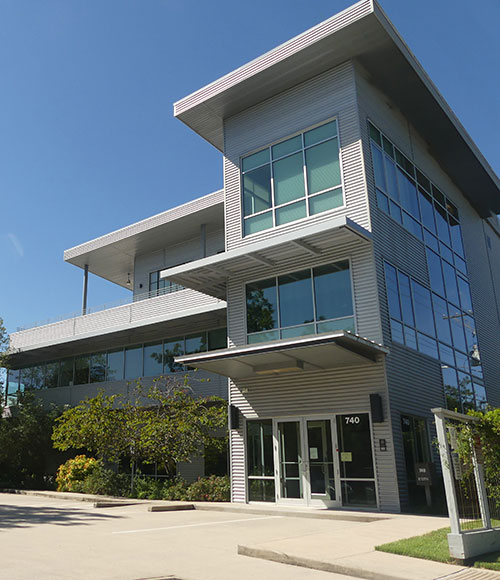
Address740 East 13th Street Houston,Texas 77008