McDowell Owens
logo
Home
About Us
  • About Us
  • Articles
  • Lab & Research Facilities
Practice Areas
  • Practice Areas
  • Fire Investigation
  • Gas System Analysis & Testing
  • Accident Reconstruction
  • Civil & Structural Engineering
  • Marine Services
  • Root Cause Analysis
  • Advanced Electronic Systems
  • Expert Electrical Failure Analysis
  • Mechanical Failure Analysis
  • Workplace Injury Investigations
  • Schedule Consultation

Litigation Support
Videos
Consultants
  • Consultants
  • Jean L. McDowell
  • Eric M. Benstock
  • Nestor J. Camara
  • Shane M. Darville
  • Blake M. Carlton
  • Mo Christou
  • Glenn H. Gleason
  • Matthew Geistfeld
  • Richard L. Gilbert
  • Jacob A. Jones
  • Mohamed Elmenshawi
  • Larry K. Hammond
  • Antonio L. Pina
  • Schedule Consultation

Address

Address

740 East 13th Street
Houston, Texas 77008

Phone Number

Phone

832-831-2910

Email

Email

[email protected]

Social Media

Phone Call Now: 832-831-2910

Contact

McDowell Owens Forensic Engineering

McDowell Owens Engineering, Inc. is a multi-disciplinary, nationwide forensic fire investigations engineering firm. Since 1986, we have provided comprehensive, unbiased forensic engineering and failure analysis services. Over the decades, we have worked with public and private clients in the legal, oil and gas, insurance, electrical, and petrochemical industries.

As established leaders in the field, McDowell Owens professional engineers, fire scientists, and consultants are experts in forensic failure analysis. Our clients rely on us to conduct thorough investigations to produce a multi-disciplinary analysis in the wake of any incident or disaster.

CONTACT US LEARN MORE
McDowell Owens EngineeringMcDowell Owens Engineerings
Details
Written by: Mcdowell Owens Integrated Forensic Engineering
Category: Uncategorised
Published: 19 May 2018
Hits: 10584
Fire Investigation Forensic ExpertsCustom Forensic Solutions

Civil & Structural Forensic Engineering Services

When a building, roof, bridge, process plant, grain elevator, sewer, drilling rig, or other structure fails, McDowell Owens experts are here to examine, evaluate, investigate, and find answers.

McDowell Owens investigates civil and structural incidents and explains what happened, how it occurred, and how to avoid the same issues in the future. We dive deep in evaluating the design, materials, and methods that were employed in the construction of a structure to determine the loading and stability factors that contributed to the loss.

McDowell Owens Civil & Structural Forensic Investigation

McDowell Owens Engineering, Inc. is a multi-disciplinary, nationwide forensic engineering firm. Since 1986, we have provided comprehensive, unbiased civil and structural forensic engineering, and failure analysis services.

As established leaders in forensics, McDowell Owens professional engineers, scientists, and consultants are experts in forensic structural investigation.

When we investigate a structural failure in a forensic investigation, we seek answers to:

Get Answers arrow
  • How and why did the structure fail?
  • Were there indications that a failure was pending?
  • If so, for what period of time were those indications apparent?
  • Ultimately, who was responsible?

Civil & Structural Expertise

At McDowell Owens, we have decades of experience, industry-based knowledge, project management skills, and analysis experience. We will identify the cause and sequence of damage to the attributable loss estimate, then produce reports that are detailed, clear, and understandable.

McDowell Owens civil & structural experts have experience in:

  • Roof Analysis
  • Stress Analysis
  • Foundations
  • Structural Failure
  • Post-Damage Structural Analysis

Our experts investigate the site, evaluate the design, materials, and methods employed in the construction, determine loading and stability factors that may have contributed to the loss, and reach an unbiased conclusion. We understand that every incident is unique, and we work to avoid the expectation bias trap.

We have investigated:

  • Structural Collapse
  • Fire and Explosion Damage
  • Water Damage
  • Construction Defects
  • Tree Impacts
  • Snow and Ice
  • Lightning Strikes
  • Vehicle Impacts
  • Wind
  • Climate Change
  • Construction Ground Vibration
  • Material and Foundation Related Failures
  • Structural Collapse
  • Fire and Explosion Damage
  • Water Damage
  • Construction Defects
  • Tree Impacts
  • Snow and Ice
  • Lightning Strikes
  • Vehicle Impacts
  • Wind
  • Climate Change
  • Construction Ground Vibration
  • Material and foundation related failures

Our Civil & Structural Forensic Consultants

McDowell Owens consultants have extensive experience in a variety of civil and structural forensic matters, allowing us to provide scientific clarification and an engineering perspective that will guide your legal team through the technical details and evidence.

Forensic investigation is vital to pre-trial discovery and it’s critical to obtain data and support during the process. McDowell Owens teams are experts at conducting civil & structural forensic investigations. We combine investigative skills, scientific data, and courtroom experience for a thorough, comprehensive, and understandable report and testimony.

McDowell Owens structural forensic experts are experienced professionals in the field, combining real-world expertise with advanced degrees and certifications in various sub-disciplines. Our team stays up-to-date with industry changes and continuously enhances their skills through research and testing.

McDowell Owens forensic consulting professionals offer valuable insight and dedicated expertise on your civil and structural forensic case through thorough analysis and research.

View more services arrow

5 Frequently Asked Questions About Civil & Structural Forensics

Civil engineering is the branch of engineering that deals with the design, construction, and maintenance of public works projects, such as bridges, roads, and water supply and treatment systems. Within forensic engineering and analysis, a civil engineer investigates the cause/s of the failure, which can be anything from design deficiencies, construction defects, materials deficiencies, and/or environmental factors.

Structural engineering is the branch of engineering that deals with analyzing and designing structures, including residential, commercial, and industrial structures, bridges, retention walls, etc. to ensure they are safe and stable.

There are many different types of civil engineering projects, including:

-Transportation infrastructure: roads, bridges, railways.

-Water supply and treatment: dams, pipes, reservoirs.

-Environmental engineering: wastewater treatment, air pollution control.

-Real estate development: housing developments, commercial buildings.

There are many types of structural loads, which can be classified into two categories: static and dynamic loads. Static loads are those that remain stationary or move at a relatively slow speed, while dynamic loads are those that move quickly or oscillate back and forth. Some common types of static loads include weight, pressure, and tension, while common types of dynamic loads include wind load, earthquake load, and impact load.

A civil engineer is responsible for the overall design of a civil engineering project, while a structural engineer is responsible for designing the structure within a project. Oftentimes, these two disciplines of engineering will overlap.

Details
Written by: Mcdowell Owens Integrated Forensic Engineering
Category: Uncategorised
Published: 19 May 2018
Hits: 7649
Electrical Failure Forensic Engineering ServicesCustom Forensic Solutions

Root Cause Analysis Forensic Scientists

The forensic engineer’s mission is to investigate, solve, and explain the most challenging engineering and scientific problems. Forensic engineering is the application of engineering principles and science in investigating the failure of a machine, component, material, structure, system, and more.

While it is easiest to think of our process as ‘reverse engineering’ – using scientific methodology to uncover why something went wrong or stopped working – it is more accurate to say we conduct a root cause analysis.

The Basics of Root Cause Analysis

Root cause analysis is an in-depth investigation of all the potential causes of an incident. When we conduct a root cause analysis, we start with one question: “What step out of the sequence of events would have prevented the incident from occurring if removed?”

This involves gathering extensive data about each potential cause, then evaluating that data to determine which cause would have stopped the incident from occurring.

The Steps of a Root Cause Analysis

While the process of conducting an analysis may differ from case to case depending on the unique circumstances of the situation, every root cause analysis follows these steps:

1. Define the Problem

Defining the problem is not as simple or obvious as it may seem, as it is not uncommon to begin the investigation only to realize that the problem lies in another area. It is crucial, then, to approach every issue with an open mind while laying aside all expectation and confirmation biases.

2. Gather Data

Gathering data means collecting every piece of available information possible. This goes far beyond reviewing raw data, conducting tests, and shifting through evidence, and extends to comprehensive interviews with everyone involved.

3. Find the Cause(s)

After thoroughly defining the problem and reviewing every possible data source, the cause(s) should be evident. They may be technical, human, procedural, or a combination of two or more.

4. Find Solutions

Knowing what caused the event is good for peace of mind and liability issues, but it is not enough in root cause analysis. It is critical to seek solutions, which are classified as corrective (short-term or stop-gap solutions that address the direct cause of the issue) or preventive (long-term resolutions that targets the root cause and prevents it in the future).

5. Develop Strategies to Correct/Prevent

Once the solutions have been identified, it’s time to work with our clients to develop a strategy to prevent the problem from occurring again.

The McDowell Owens Difference

McDowell Owens has extensive resources that allow us to provide a custom forensic solution for every assignment. We are uniquely qualified to conduct root cause analysis for incidents where injury or property damage have occurred, such as:

  • Building Collapse
  • Sprinkler Failure
  • Machine Malfunction
  • Fires and Explosion
  • Construction Defects
  • Electrical Failure
  • Materials Failure
  • Structural
  • Product Defect
  • Collisions and Crashes
  • Marine Incidents
  • Energy and Renewable System Failure
    • Building Collapse
    • Sprinkler Failure
    • Machine Malfunction
    • Fires and Explosion
    • Construction Defects
    • Electrical Failure
    • Materials Failure
    • Structural
    • Product Defect
    • Collisions and Crashes
    • Marine Incidents
    • Energy and Renewable System Failure

We evaluate the available evidence and apply scientific methods, specialized knowledge, and the latest analytical technologies to reach scientifically sound opinions and solutions for our clients.

When performing forensic analysis, our team thoroughly investigates the issues – from taking data at the scene to analyzing drawings, material specifications, supporting documentation, and conducting tests. We produce reports that are clear, concise, and accurate.

About McDowell Owens

McDowell Owens Engineering, Inc. is a multi-disciplinary, nationwide forensic engineering firm. Since 1986, we have provided comprehensive, unbiased forensic engineering and analysis services. Over the decades, we have worked with private and public sector clients in the legal, oil and gas, insurance, electrical, and petrochemical industries, among others.

As established leaders in the field, McDowell Owens professional engineers, fire scientists, and consultants are experts in forensic failure analysis. Our clients rely on us to conduct thorough investigations to produce an accurate analysis in the wake of any incident or disaster.

Frequently Asked Questions About Root Cause Analysis

Root cause analysis (RCA) is a problem-solving technique for identifying the root causes (the most basic, fundamental causal factors) behind an accident or problem. By finding and addressing the root causes, businesses and organizations can prevent the issue from recurring in the future. RCA is commonly used in fields like engineering, healthcare, and business/quality management to uncover systemic issues and implement solutions.

The general steps in root cause analysis typically include the following:

- Identify and describe the problem (develop various hypotheses related to the event).

- Gather information about the problem which will often involve creating a timeline of events leading up to the incident to determine if there are any abnormalities that led to the event.

- Analyze the information to identify possible root causes and other causal or contributory factors.

- Based upon the conducted analysis, rule out various hypotheses that do not align with the facts and continue to conduct the analysis until the most likely hypotheses of event is consistent with the facts and root causes.

- Develop and implement solutions to address the root causes.

To identify the most probable root causes of an issue, all potential causes should first be considered. The root causes that are most supported by the available data and analysis are then selected as the most likely explanations for the problem. By thoroughly evaluating the evidence at hand, the underlying factors behind an issue can be determined.

The key is to use a combination of tools to thoroughly analyze all potential aspects of a problem. A systematic methodology is essential for effective root cause analysis. Some common tools and techniques used in root cause analysis are:

5 Whys - Asking "why" 5 times to peel back layers of causes. Helps get to the root of a problem.

Fishbone Diagram - A visual tool that depicts the potential causes of a problem and helps organize potential factors.

Fault Tree Analysis - A top-down logical diagram showing how failures propagate through a system. This helps identify root causes.

Pareto Charts - Bar charts that focus on the vital few causes by showing frequency of problems/defects.

Scatter Diagrams - These diagrams plot data to visualize correlation between two variables and helps identify possible causal relationships.

Control Charts - Charts track process metrics over time to identify special causes of variation, which helps detect root causes of outliers.

Histogram - Histograms visualize the distribution of a process parameter, which can show issues with the process center or variation.

Root Cause Map - Organizes and visually depicts all potential causes and sub-causes, and can help trace back to root causes.

Change Analysis - Compares times when a process worked vs. when it failed to operate effectively.

Barrier Analysis - Identifies barriers that could have prevented a defect, which helps strengthen systems.

Details
Written by: Mcdowell Owens Integrated Forensic Engineering
Category: Uncategorised
Published: 19 May 2018
Hits: 9639
Marine Forensic Engineering ServicesCustom Forensic Solutions

Marine Forensic Engineering Services

From the time cargo is loaded until it reaches its destination, both the cargo and the vessel are subject to peril. Nature, human error, and mechanical failures are dangers that are magnified by the very process of sailing from shore.

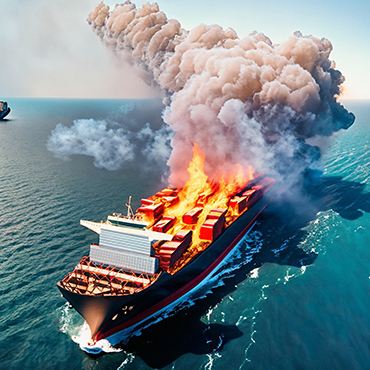
Sinkings, fires, accidents, and other incidents involving marine vessels, piers, and facilities occur regularly due to nature, human error, and mechanical failures. Whether it's a natural catastrophe or a collision between two vessels, we are here to help.

McDowell Owens investigates marine incidents and explains what happened, how it occurred, and how to avoid the same issues in the future.

McDowell Owens and Marine Forensic Investigation

McDowell Owens Engineering, Inc. is a multi-disciplinary, nationwide forensic engineering firm. Since 1986, we have provided comprehensive, unbiased marine forensic engineering and failure analysis services.

As established leaders in forensics, McDowell Owens professional engineers, scientists, and consultants are experts in marine accidents and losses.

learn more arrow

Marine Expertise

Our team of forensic engineers and investigators specialize in evaluating a wide array of maritime incidents such as fires, equipment failures, on-board accidents, sinkings, capsizes, groundings, and damage to piers and wharves.

Our teams at McDowell Owens have decades of industry-based knowledge, project management skills, and analysis experience. We can identify the cause and sequence of damage to the attributable loss estimate and produce reports that are detailed, clear, and understandable.

McDowell Owens experts have experience spanning from ocean-going vessels and offshore platforms to ‘brown water’ vessels on inland waterways to recreational vessels and yachts. We have been involved in forensic investigations including:

Contact Us arrow
    • Shipboard Fires and Explosions
    • Personal Watercraft Injuries
    • Fuel System Defect Analysis
    • Marine Loss Analysis
    • Marine Facilities Damage
    • Hull and Deck Equipment
    • Marine Accident Investigation
    • Hull, Deck, and, Rigging Failures
  • Crewman, Longshoreman, and Stevedore Injuries
  • Container and Bulk Cargo Vessel Accidents
  • Shipboard Fires and Explosions
  • Personal Watercraft Injuries
  • Operator Error Determination
  • Marine Loss Analysis
  • Cruise Ship/Passenger Ferry Operational Issues
  • Marine Facilities Damage
  • Vessel Collisions and Damage
  • Marine Accident Investigation
  • Hull, Deck and Rigging Failures
  • Crewman, Longshoreman and Stevedore Injuries
  • Hull, Deck, and Rigging Failures
  • Fuel System Defect Analysis
  • Container and Bulk Cargo Vessel Accidents
  • Subsea/Offshore Energy
  • Hull and Deck Equipment

Commercial Ship Accident Analysis

Allianz’ Safety & Shipping Review estimates that between 75-96% of all marine accidents can be attributed in some way to human error. Those accidents mean billions of dollars in unnecessary costs, needless crew injuries, and avoidable loss of life. Commercial ship accidents are serious and frequently have impacts felt across industries and around the world, which then requires careful, in-depth analysis and clear and precise reporting.

McDowell Owens draws on our in-depth knowledge of physics, hydraulics, ocean conditions, and ship response behavior in our investigations. Our team of forensic engineers and investigators dig deep to produce accurate reconstructions of the incident, provide detailed insights into every factor and condition that led to the incident, and explain how those conditions resulted in damage, injury, or loss of life.

    • Cargo Claims
    • Vessel Hull and Machinery
    • Equipment Loss Mitigation
    • Equipment Loss Mitigation
  • Vessel Marine Casualties or Accidents
  • Vital System Automation
  • Cargo Claims
  • Vessel Hull and Machinery
  • Vessel Pollution
  • Equipment Loss Mitigation
  • Vessel Structural Design and Damage/Failure
  • Equipment Loss Mitigation
  • Vessel Stability
  • Vessel Marine Casualties or Accidents
  • Vital System Automation

Large Scale Forensic Investigation

Our experts can perform large-scale examinations of cruise ships, cargo vessels, or passenger ferries. We provide expert marine investigation services for mechanical, electrical, or structural failures.

Inland Marine Services

Our inland marine services encompass a multitude of coverages, from hull and machinery coverage of inland watercraft to fire, damage, collision, dock, marina, physical injury, and much more.

Recreational / Pleasure Boats / PWC

Accidents involving small and privately-owned crafts are fundamentally different from accidents involving motor vehicles. Our certified experts provide the experience and attention necessary for reconstruction and investigation addressing the three-dimensional nature of marine accidents. These factors include ramping, overriding, vaulting, downward forcing, and many other characteristics unique to the maritime environment.

Our Marine Forensic Consultants

McDowell Owens consultants have extensive experience in a wide range of marine forensic matters, allowing us to provide scientific clarification and an engineering perspective that will guide your legal team through the technical details and evidence.

McDowell Owens marine forensic experts are leaders in the field, demonstrating expertise in research, teaching, and publishing. We combine real-world experiences, advanced degrees, and certifications in several sub-disciplines. We stay ahead of changes by actively contributing to industry groups, conducting research and testing, teaching aspiring engineers and scientists, and presenting to peer groups.

Contact Us arrow

Litigation Support and Marine Forensics Expert Witnesses

Since our founding in 1986, McDowell Owens experts have been involved in over 20,000 cases. We have extensive experience in every stage of the litigation process, from collecting and presenting evidence to expert witness testimony, forensic analysis, and post-litigation actions.

We provide dependable, unbiased litigation support that is comprehensive, yet accessible to non-experts. McDowell Owens teams combine investigative skills, scientific data, and courtroom experience for a thorough and understandable report.

Contact Us arrow

When you work with us:

  • We will match you with an engineer with the expertise to inform your case.
  • We rapidly respond to your litigation needs, including 24/7 support.
  • You are assured of working with a team of licensed experts with extensive credentials.

5 Frequently Asked Questions About Marine Forensic Engineering Analysis

Marine forensic engineering investigates and analyzes maritime accidents and incidents to determine the causes.

The most common causes of marine accidents include collisions, groundings, fires, and explosions.

One of the most prominent challenges that forensic engineers face when investigating marine accidents is dealing with the often fluid and unstable environment. In addition, depending on the accident, the vessel may have sunk or partially sunk which can alter the condition of key items necessary for conducting a failure analysis.

Forensic engineers use tools and techniques to investigate marine accidents and help pinpoint the initial cause, including photography, 3D scanning, and computer modeling.

Forensic engineering can help to improve safety in the maritime industry by using the knowledge gained in investigating a particular accident to help to identify and correct other similar potential hazards before they cause accidents or injuries.

Details
Written by: Mcdowell Owens Integrated Forensic Engineering
Category: Uncategorised
Published: 19 May 2018
Hits: 1547
Gross Negligence
Workplace Safety
Gross Negligence & Product Design Defect

Page 15 of 19

  • 10
  • 11
  • 12
  • 13
  • 14
  • 15
  • 16
  • 17
  • 18
  • 19
Custom Forensic SolutionsCustom Forensic Solutions

Custom Forensic Solutions

Our mission is to investigate, solve, and explain the most challenging engineering and scientific problems.

McDowell Owens has extensive resources that allow us to provide a custom forensic solution for every assignment. We evaluate the available evidence and apply scientific methods, specialized knowledge, and the latest analytical technologies to reach scientifically sound solutions for our clients.

When performing forensic analysis, our team thoroughly investigates the issues, from taking data at the scene to analyzing drawings, material specifications, supporting documentation, and conducting tests.

We produce reports that are clear, concise, accurate, and comprehensive.

READ MORE

Our Areas of Expertise

We provide technical answers and engineering solutions for insurance companies, law firms, and businesses – anyone looking for an unbiased, scientifically sound answer to questions involving:

Custom Forensic Solutions

Gas System Failure Analysis

Learn More

Custom Forensic Solutions

Fire Investigation

Learn More

Custom Forensic Solutions

Accident Reconstruction

Learn More

Custom Forensic Solutions

Electrical Failure Analysis

Learn More

Custom Forensic Solutions

Mechanical Failure Analysis

Learn More

Custom Forensic Solutions

Civil & Structural Failure Analysis

Learn More

Custom Forensic Solutions

Root Cause Failure Analysis

Learn More

Custom Forensic Solutions

Marine Failure Analysis

Learn More

Custom Forensic Solutions

Advanced Electrical Systems

Learn More

Custom Forensic Solutions

Workplace Injury Investigations

Learn More

For our clients, we have the experience and expertise to determine the cause and scope.

Expert Witness Services

McDowell Owens team of highly credentialed experts has a proven track record of success in helping audiences understand the value and strength of our findings.

We present the facts based on solid science. The science is vital, of course, but it doesn’t mean much without the ability to make it understood and put in its proper context to tell the true story of what happened.

Communication is the key to favorable case outcomes in both pre-trial settlements and verdicts. The experts at McDowell Owens have a firm grasp of Frye and Daubert standards and possess the ability to take complex concepts and turn them into easily understood principles for all to understand. We ensure that the judges and juries fully understand the technical and scientific information from your case, leaving them with a clear picture and convincing evidence.

CONTACT US

When you work with McDowell Owens experts in court, you will:

  • Partner with professionals that offer academic credentials and real-world courtroom experience to lend expertise and credibility to your case.
  • Have a team that will always meet stringent court and internal deadlines. Our highly-focused approach delivers timely work.
  • You are assured of working with a team of licensed forensic engineers with extensive credentials.

McDowell Owens Laboratory – Services and Capabilities

Our “clean” laboratory services are utilized by our staff on a regular basis to provide our clients with the most accurate and complete analysis possible. Our laboratory capabilities are available to anyone who needs lab space and/or the proper documentation, including the following:

  • Fire Debris X-Ray and Photography
  • Electrical Testing, Recording, and Photography
  • Mechanical Failure Analysis (X-ray and Digital Microscopy)
  • Appliance Fire, Water Loss and Other Failure Analysis/Testing/Documentation
  • Dryers and Other Appliances
  • Water Losses in Washing Machines, Dishwashers, Sink, Toilet Valves, Etc. (Testing Capabilities and X-ray where needed)
  • Various Product Testing
  • Specialized Laboratory Testing (Designed as needed and with your protocol)

Our laboratory has full video recording capability with real-time observation and remote participation for those who cannot be present. All inspections, examinations, and testing can be recorded, as can all digital microscopes.

“Dirty” laboratory services are available to anyone who needs teardown space for engines, transmissions, etc. They can then be examined, documented, photographed, and X-rayed in the “clean” lab as needed.

READ MORE

Our Clients

McDowell Owens does not publish the names of clients unless required to do so. They include some of the largest and most sophisticated Forensic Engineering service users in the Western Hemisphere. We believe, however, that we are hired to solve a problem, not to use their names to attract business.

24/7 To Meet Your Needs

Our experts are here 24/7 to help with the analysis of fires, explosions, and vehicular accidents, as well as structural, mechanical, and electrical failures using the latest technology and testing methodologies.

Send us a Message

Invalid Input

Invalid Input

Invalid Input

Invalid Input

Invalid Input

Invalid Input

Invalid Input

Invalid Input

24/7 To Meet your NeedsCustom Forensic Solutions

Engineering Solutions for the Future

Stay informed and join our growing community of industry insiders by subscribing to our newsletter today.

832-831-2910
Contact Us
Invalid Input

Invalid Input

McDowell Logo

McDowell Owens team of professional engineers, fire scientists, and consultants specialize in failure analysis.

Contact

  • Footer Phone 832-831-2910
  • Footer Email [email protected]
  • Footer Map 740 East 13th Street Houston, Texas 77008

Quick Links

  • About
  • Litigation Support
  • Articles
  • Contact Us
  • Service Areas

2026 McDowell Owens. All Rights Reserved.
Designing By Activate Digital Media.

  • Sitemap